For restaurants, cafes, grocery stores, and food businesses, a walk-in cooler is not just another piece of equipment. It protects inventory, supports food safety, and keeps daily operations moving. When a walk-in cooler is not holding temperature, even a small issue can become expensive quickly.
Business owners in Lake Zurich, IL and nearby suburbs often notice the problem before they know the cause. The cooler may feel warmer than normal. Product may not be as cold as it should be. Staff may see the temperature rising during busy hours. In some cases, the unit seems to run constantly but still cannot maintain the correct temperature.
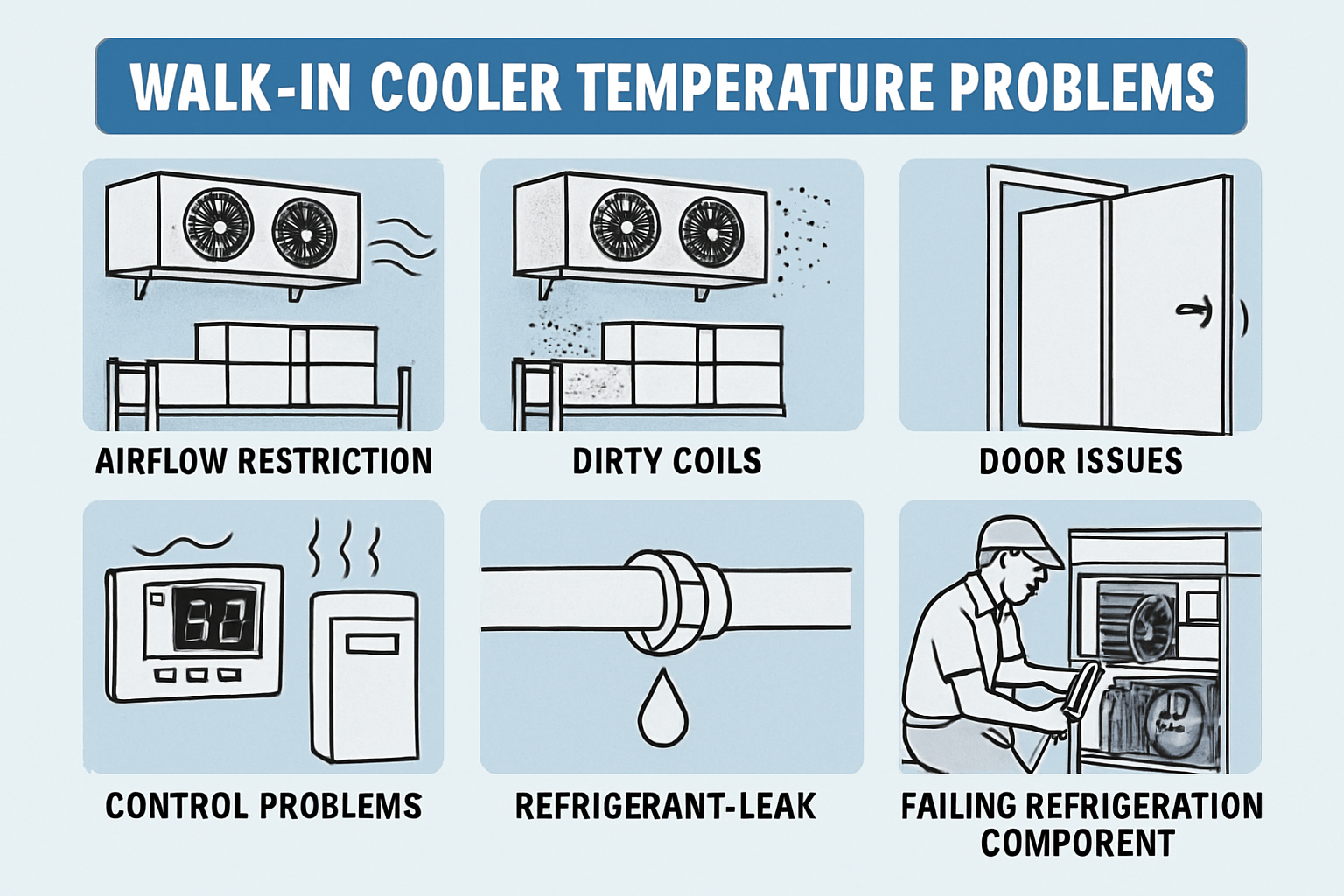
Walk-in cooler temperature problems can come from airflow restrictions, dirty coils, door issues, control problems, refrigerant leaks, or failing refrigeration components. Some causes are simple to spot, while others require a commercial refrigeration technician.
Why Cooler Temperature Problems Should Not Be Ignored
A walk-in cooler that is struggling to hold temperature can affect more than comfort or convenience. For food businesses, temperature control is tied directly to product quality and food safety.
If the cooler temperature keeps climbing, inventory may spoil, service may be interrupted, and staff may need to spend extra time checking products or moving items. The refrigeration system may also run longer than normal, which can put extra stress on compressors, fans, and electrical parts.
It is better to investigate the problem early instead of waiting until the cooler completely stops cooling.
Common Signs Your Walk-In Cooler Has a Temperature Problem
A temperature issue may start small. Paying attention to early warning signs can help prevent a larger repair.
Common signs include:
- The cooler is warmer than the thermostat setting
- Temperature changes throughout the day
- Product near the door feels warmer than product in the back
- The system runs constantly
- Ice or frost appears on the evaporator coil
- The door does not close or seal properly
- Staff notice unusual noises
- Water is pooling near the cooler
- Food or beverage products are not staying cold enough
If your team is adjusting the thermostat repeatedly just to keep the cooler cold, there is likely an underlying issue that needs service.
Dirty Condenser Coils Can Reduce Cooling
One of the most common causes of poor refrigeration performance is a dirty condenser coil. The condenser helps remove heat from the refrigeration system. When the coil is covered with dust, grease, lint, or debris, it cannot release heat efficiently.
This is especially common in restaurants, kitchens, and food prep areas where grease and airborne particles build up over time. A dirty condenser can make the system run longer, cool less effectively, and increase wear on major components.
What Business Owners May Notice
When the condenser coil is dirty, the cooler may still run, but it may not recover temperature quickly after deliveries, lunch rushes, or frequent door openings. The unit may also seem louder or hotter than usual around the condensing unit.
Coil cleaning should be handled carefully. A technician can clean the equipment properly and check whether the system has been damaged by running under poor conditions.
Door Gasket and Door Closure Problems
Walk-in cooler doors get heavy use in busy businesses. Over time, door gaskets can tear, flatten, loosen, or become dirty. If the door does not seal correctly, warm humid air enters the cooler.
That warm air makes the refrigeration system work harder. It can also contribute to frost, ice build-up, water issues, and temperature swings.
Simple Checks Staff Can Do
Staff can safely look for obvious gasket damage, gaps around the door, or a door that does not close all the way. If light is visible around the door seal, or if the door has to be pushed hard to close, the cooler may be losing cold air.
A technician can inspect the door hardware, hinges, gaskets, closers, and temperature impact.
Too Much Product or Poor Airflow
Walk-in coolers need proper airflow to maintain even temperatures. If boxes are stacked too close to the evaporator fans or packed tightly against the walls, cold air may not circulate properly.
This can cause warm spots inside the cooler even when the refrigeration system is working. Product near the airflow path may stay cold, while other areas do not.
Better Storage Habits Can Help
Avoid blocking evaporator fans. Leave space around products so air can move. Try not to overload the cooler after deliveries. Large amounts of warm product can take time to cool and may cause temporary temperature increases.
If airflow is clear but the cooler still cannot hold temperature, the issue may be mechanical.
Ice Build-Up on the Evaporator Coil
Ice or frost on the evaporator coil is a warning sign. The evaporator coil absorbs heat from inside the cooler. If it becomes covered in ice, airflow is restricted and cooling performance drops.
Ice build-up can be caused by several issues, including door leaks, frequent door openings, defrost problems, fan issues, low refrigerant, or control problems.
Do not chip ice off the coil with tools. This can damage the coil and create a more serious refrigeration problem. If ice is present, it is best to have a commercial refrigeration technician inspect the system and find the cause.
Thermostat or Control Problems
Sometimes the refrigeration equipment is capable of cooling, but the controls are not reading or responding correctly. A thermostat, sensor, control board, or defrost timer issue can cause incorrect cycling or poor temperature control.
A cooler may run too long, not run enough, or defrost at the wrong time. These problems can be hard to diagnose without testing.
A technician can check control settings, sensor readings, wiring, and system operation to determine whether the issue is with the controls or the refrigeration equipment itself.
Refrigerant Leaks and Mechanical Issues
If a walk-in cooler is low on refrigerant, it usually means there is a leak. Refrigerant does not get used up during normal operation. Low refrigerant can cause poor cooling, long run times, ice on the coil, or compressor stress.
Other mechanical issues may include failing fan motors, compressor problems, restricted refrigerant flow, electrical issues, or worn components.
These repairs should always be handled by a trained commercial refrigeration professional. Refrigerant systems, compressors, and electrical components are not safe areas for DIY work.
When to Call for Walk-In Cooler Repair
Call for service if your walk-in cooler is not holding temperature, running constantly, icing up, leaking water, making unusual noises, or showing repeated temperature swings.
You should also call if the problem returns after cleaning, reorganizing product, or checking the door. Repeated temperature issues usually mean something inside the refrigeration system needs attention.
Four Elements Service provides commercial refrigeration repair, walk-in cooler repair, walk-in freezer repair, ice machine repair, and preventive maintenance for businesses in Lake Zurich, IL and nearby suburbs.
Call Four Elements Service at 847-350-8141 or email service@fourelementservice.com
Why is my walk-in cooler not maintaining the correct temperature?
Your walk-in cooler may not be maintaining the correct temperature due to airflow restrictions, dirty coils, door issues, control problems, refrigerant leaks, or failing refrigeration components.
What are the early signs that my walk-in cooler has a temperature problem?
Early signs include the cooler feeling warmer than the thermostat setting, temperature fluctuations throughout the day, warm product near the door, the system running constantly, frost on the evaporator coil, door seal issues, unusual noises, water pooling, and food not staying cold enough.
How does a dirty condenser coil affect cooler performance?
A dirty condenser coil can reduce cooling efficiency, cause the system to run longer and louder, and increase wear on components because it cannot effectively release heat.
What should I do if my walk-in cooler’s door gasket is damaged or not sealing properly?
You should inspect the gasket for damage, gaps, or dirt and ensure the door closes properly; a technician can examine hardware, hinges, and properly replace or repair damaged gaskets to ensure a proper seal.
When should I call a professional for walk-in cooler repairs?
Call a professional if your cooler is not holding temperature, running constantly, icing up, leaking water, making unusual noises, or repeatedly experiencing temperature swings, especially after troubleshooting efforts.